Mission Statement

The Sonoma County Court Appointed Special Advocates (CASA) Program is committed to serving abused and neglected children coming before the Juvenile Court for protection and rehabilitation services.
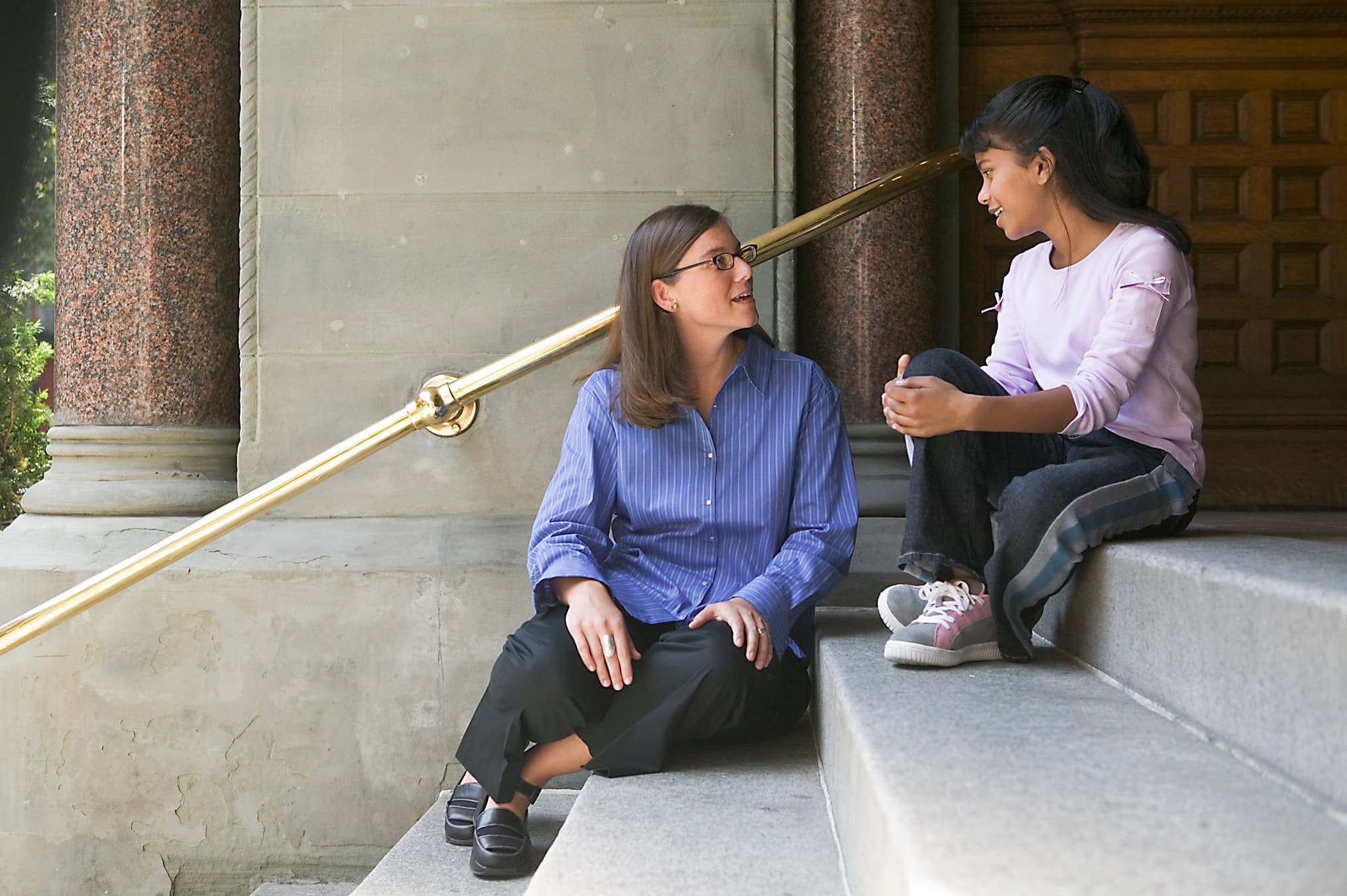
The purpose of the CASA program is to humanize the complex child welfare system for the child victim by providing a trained volunteer who will act as a consistent role model, advocate, and potential life connection.

Program Description

The goal of the Court Appointed Special Advocates (CASA) program is to prevent abused and neglected children from becoming lost in the Juvenile Dependency system. The objective of matching a CASA Volunteer, a trained advocate from the community is to ensure that the child’s best interest is represented.
The volunteer has three essential roles as an advocate:

to be the child’s voice in court, representing their needs, concerns, and best interests;

to complement the Juvenile Court/Child Welfare system by researching and assessing the circumstances of each case and reporting their recommendations and findings;

to continue to support the child and the progress of the case as it moves through the system;

Represent the Child

Be the child’s voice in court, representing their needs, concerns, and best interests.

Research, Assess, Report

Complement the Juvenile Court/Child Welfare system by researching and assessing the circumstances of each case and reporting their recommendations and findings.

Support the Child

Continue to support the child and the progress of the case as it moves through the system.

The program receives referrals directly from the Juvenile Court. CASAs are matched to the child and provide approximately 10-12 hours of service per month on casework. After reviewing the case information and court reports the volunteer consults with clinical and program staff to develop a case plan. Prior to each court hearing, the volunteer prepares a court report containing their evaluations and recommendations for the child. The Juvenile Court judge reads and considers the CASA report in addition to the social worker’s report prior to making his decision. Volunteers attend all Juvenile Court hearings that affect the rights and welfare of the child. Each court appointed volunteer is carefully screened and receives 27-32 hours of expert training in skills necessary to fulfill his or her responsibilities.
CASA volunteers are in a unique position because they provide information not usually available to the Juvenile Court. Because of the growing number of cases filed in Juvenile Court and dwindling resources to adequately monitor the cases, judges find the CASA volunteers to be positive complements to providing the information necessary to make better-informed decisions.
In addition to our services to abused and neglected children, the CASA program works to provide community education and awareness concerning the issues of child abuse, neglect and child welfare policy. We are also committed to working toward public policies that promote child abuse prevention and addressing reforms in the Juvenile Dependency/Foster Care system.

Values

At CASA of Sonoma County, we believe every child deserves to be seen, heard, and valued for who they are. The youth we serve come from diverse racial, cultural, gender, religious, and ability backgrounds — and their experiences within the child welfare system are deeply shaped by these identities. This is about strengthening the heart of CASA advocacy — building trust, centering the child’s voice, recognizing systemic inequities, and showing up as advocates who are informed, compassionate, and culturally responsive.

CASA Brochure and Volunteer Opportunity Poster:

Why CASA?

When the Sonoma County Juvenile Court Judge assumes jurisdiction and finds a child to be a dependent of the court, many different professionals enter the case. These include social workers, minors’ attorney, and attorneys from County Counsel, the Public Defender’s office, law enforcement officials, and counselors. Everyone involved has some interest to represent and while their intent is to serve the child, none of these professional’s time is focused solely on the child’s esteem, daily well being, personal desires/needs and interests.
The Sonoma County Juvenile Court’s objective in assigning a CASA is to provide a single consistent person who will take the time to mentor, advocate for and keep the interests and welfare of the child a priority. Serving as a complement to the deposition of the case, CASAs can provide the companionship and self-esteem enhancing support needed during a time of turbulence and confusion.
The CASA of Sonoma County Program provides representation without charge to children between the ages of birth to twenty-one, who have been adjudged dependent children of the court under Welfare and Institution Code Sections 300 and 602. CASA is one of 44 similar programs across the state and 900 across the United States. We are a member of the National and State CASA Associations.

Program Goals

  1. To reduce the trauma of children in the Juvenile Court dependency system by matching a child with a trained CASA volunteer who will offer support through a long-term consistent relationship.  The volunteer will explore and recommend resource options available to the child and offer the child guidance in understanding and dealing with the complex, unfamiliar court and child welfare systems.
  1. To advocate vigorously for the rights of abused and neglected children in Sonoma County ensuring that all “reasonable efforts” have been made for a child at every stage of the court dependency process.
  1. To improve the quality of information presented to the Juvenile Court, on behalf of the child, by informing the court of the child’s adjustment and state of mind by gathering relevant information and making appropriate case recommendations documented in a written court report.
  1. To develop and implement a sound program management plan with a comprehensive strategy for the recruitment, retention, supervision, and training of a competent volunteer corps that is ethnically, racially, and linguistically representative of the population to be served.

Annual Objectives

Meet The Children

Success Stories

The following are a few success stories we’d like to share with you; evidence of the meaningful impact of CASA work.
“I gave him his backpack and new clothing for school. He did not say much and just went to his room. A few minutes later he walked out with his new jeans and t-shirt on. He said, ‘I am going to wear these everyday;’ we laughed and later he said, ‘I have never had new clothing’.” — Tracy (A CASA volunteer)
“I observed him from across the room in the recreation center, jumping up and down and shouting. I approached him gingerly, and, as I came closer I could now hear what he was saying, ‘I got a CASA and he’s coming to see me tomorrow!’ It was moving to witness this young boy’s happiness, considering all he had already gone through in his young life.” — Jamie (A CASA volunteer and group home social worker)
“We have rules in the group home about tattoos, so you can imagine that I was disappointed when Barry, one of the youths in my group had drawn a tattoo on his arm. I approached Barry and asked him to wash the tattoo off. He was hesitant and didn’t want to do it, so I asked him to come with me and I would help him. As I grabbed the soap and looked at his arm I noticed that the tattoo said ‘I Heart George’. I asked him, ‘Barry, who’s George?’, and he answered, ‘My CASA friend’. Well.. right then and there I decided there’s an exception to every rule.” — Liz (Social Worker)
Join those who support and care about the future of CASA by adding your comments and testimonials to Great Nonprofits. Your comments matter and do make a big difference! Try using stories, recent events, or examples of how CASA and/or your work with CASA has made an impact to your life, our children’s lives and our community. Please make sure to keep the confidentiality!

Mary Ellen’s Story

MaryEllen is not here with us; her case took place in 1874, but she is here with us in spirit because her case is regarded as the beginning of public concern for abused and neglected children.
MaryEllen was a child born out-of-wedlock whose mother and father were dead. The New York Commission of Charities and Correction had given her to a Mr. and Mrs. Connolly who were to care for her and report each year on their progress.
The Connollys abused her. She was beaten, locked in her room and rarely allowed outside, and she was not given adequate food or clothing. A neighbor who had been upset by the child’s screaming told a mission worker. The mission worker could find no one to intervene; the police had no grounds because no crime was being committed; and the agencies wouldn’t get involved since they didn’t have legal custody.
An appeal was finally made to Henrey Bergh, the founder and president of the Society for the Prevention of Cruelty to Animals. He believed MaryEllen should be entitled to at least the same protection against cruelty that was already given, by law, to animals. He took up her cause and persuaded a judge to hear her case.
MaryEllen was carried into the courtroom wrapped in a horse blanket. This is what she said: “My mother and father are dead. I don’t know how old I am. I call Mrs. Connolly ‘mama’. I have never had but one pair of shoes, but I cannot recollect when that was. My bed at night has been a piece of carpet stretched on the floor underneath a window. Mama has been in the habit of whipping me with a twisted whip – a raw hide. (Mama) struck me with a scissors and cut me. I have no recollection of ever having been kissed by anyone – I have never been kissed by Mama. Whenever Mama went out, I was locked up in the bedroom. I do not want to go back and live with Mama, because she beats me so.”
MaryEllen was removed from the people who mistreated her. Her case stirred public attention and complaints began to pour in to Henrey Bergh. So many cases of child-beating and cruelty to children came to light that a community meeting of citizens was called and an association “for the defense of outraged childhood” was formed. That association gave rise to the Society for the Prevention of Cruelty to Children, which was incorporated the year after Mary Ellen’s case.

CASA Staff

Executive Director

Heloisa Heinen, MPA

Program Manager

Valerie Richardson

Advocate Supervisor

Kimberly Herman

Advocate Supervisor

Elaina Ferguson

Advocate Supervisor

Aliyana Montevirgen

Advocate Supervisor

Rachel Cappelen

Program Assistant/Office Manager

Isabella Marquez

Communications & Outreach Coordinator

Nicole Curreri

Bookkeeping

Vaunda Goodfellow

Office Interns and Volunteers

Paul Moosman

Alexis Perez Francisco

Emma Davis

Meghan Sweeney

CASA Board of Directors

Founding Executive Director

Millie Gilson, MSW
Term (1996-2021)
Program Consultant

President

Joanne Brown, MSW, JD Retired Superior Court Commissioner

Vice President

Leslie Wolski
VP Experience & Lifestyle
Gallaher Signature Living
Former CASA Volunteer

Secretary

Amanda Tallman
Administrative Technician
Brelje & Race Consulting Engineers
Lived Experience

Treasurer

Karen Newell
CEO
CUE Management Solutions, LLC
Former CASA Volunteer

Board Member

Mary Jo Williams
Retired CEO

Board Member

Sophia Metzner
Clinical Social Work/Therapist, LCSW

Board Member

Arnold Rosenfield
Retired Superior Court Judge
CASA Program Founder

Board Member

Jameka Rothschild
Adult Probation Officer
Former CASA Staff and Volunteer

Board Member

Debra Sanders
Associate General Counsel II
School and College Legal Services of California
Previous CASA Trainer

Board Member

Abigail Levine
Director of Human Resources
WBE (W. Bradley Electric)

Board Member

Meghan Sweeney
Operations Professional

Agency Advisors, Liaisons and Faculty Consultants

Hon. Arnold Rosenfield

Superior Juvenile Court Judge, Founder of CASA Program (Retired)

Millie Gilson, MSW

CASA of Sonoma County Founder

Honorable Commissioner Daniel Chester

Juvenile Court Judge

Madaliene Sowers

Attorney at Law (Minors)

Cazzie Brown

CASA, Youth Advisor

Hon. Kenneth J. Gnoss

Presiding Juvenile Court Judge

Donna Broadbent

Division Director, Family, Youth & Children’s Services

Megan Burns

Trauma & Anxiety Consultant

Chase Holt

Positive Images – LGBTQI Youth Advocacy

Bob Chapman

CASA, Training Panel

Vanessa Azevedo

Family, Youth, & Children’s Services (Liaison to CASA)

Rafael Vasquez

S.R.J.C. Diversity Outreach Specialist

Joanna Paun

Sonoma County Office of Education Foster & Homeless Youth Education Services Coordinator

Historians

Fesseha Atlaw
Susan Gorin
Tresa Headrick
Bob Klose (in memory)
Cindia Martinez
Susan Medeiros (in memory)
Barry Palma

Amelia Passetti (in memory)
Allison Pharis
Rickee Raney
Sharon Smith
Gregory Cho
Chris Roach
Austin O’Malley

Ed Campaña
Roni Brown
Karleen Arnink-Pate
Mary Ann Wakefield
Wanda Wright
Laura Ramirez

Become a CASA Today!

Signup for eNews